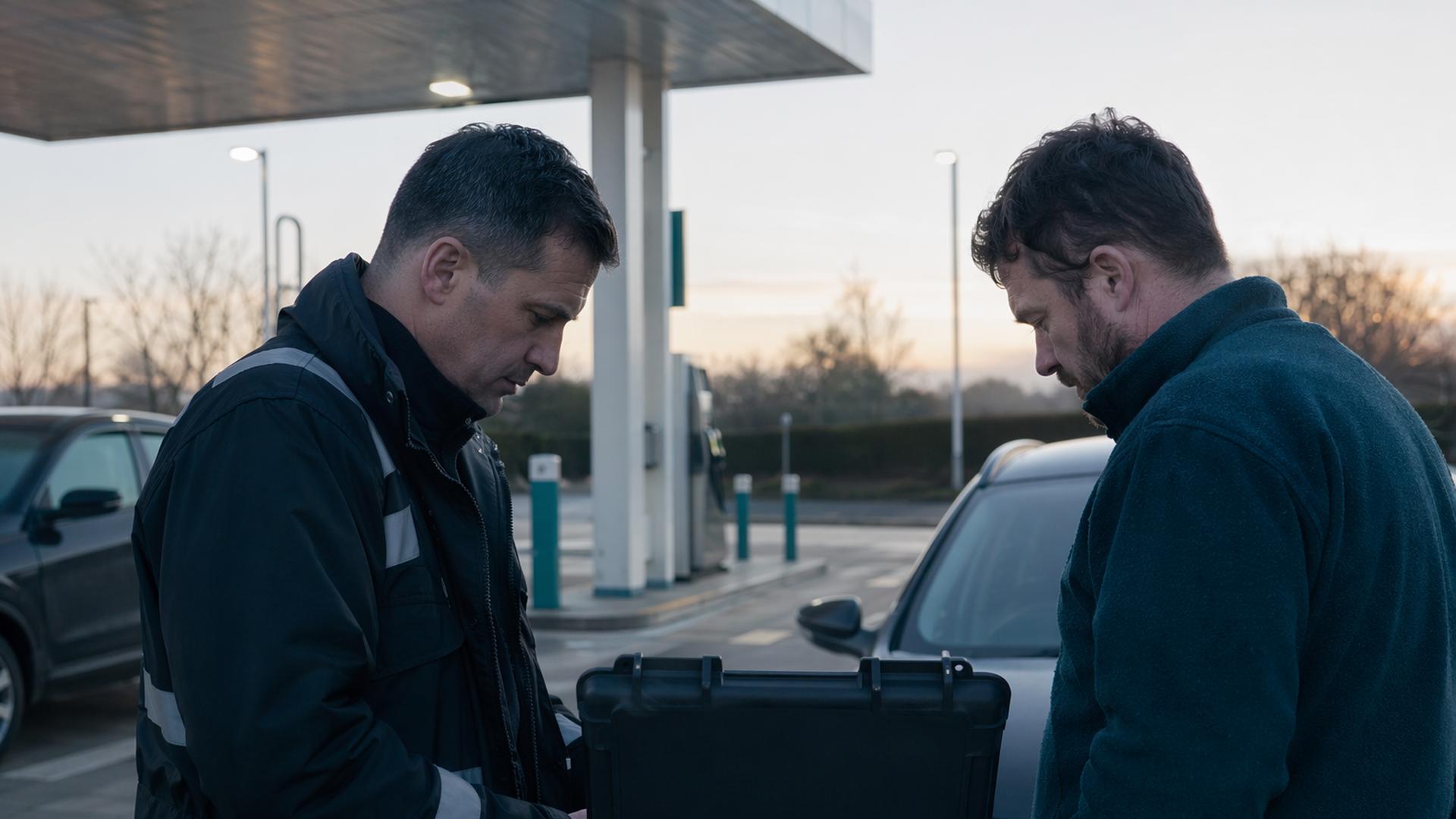
7 Things to Expect If You Fail a Roadside Drug Test in the UK
Published by Drug Driving Solicitors, specialist defence lawyers for drug driving charges across England and Wales.
Failing a roadside drug test is a disorienting experience. One moment you are pulled over by a police officer; the next, a sequence of formal legal steps begins to unfold around you. For most people, this is entirely unfamiliar territory, and not knowing what comes next can make an already stressful situation feel far more overwhelming than it needs to be.
This article walks you through the seven key stages you are likely to encounter after a positive roadside drug test result in England and Wales. Understanding what each stage involves, why it happens, and what it means for your position can help you make better decisions and engage more effectively with any legal advice you receive along the way.
1. The Roadside Device Produces a Positive Reading
What the Test Actually Measures
The roadside drug test is carried out using a type-approved screening device, most commonly the Securetec DrugWipe or the Draeger DrugTest 5000. These devices are designed to detect the presence of specific controlled substances, including cannabis and cocaine, by analysing a swab taken from the inside of your mouth. It is worth understanding that the roadside device does not measure impairment; it measures the presence of a substance at or above a threshold level set for screening purposes. A positive reading at the roadside is not in itself the evidence that will be used against you in court.
What a Positive Result Means at This Stage
A positive result on the screening device triggers the next phase of the process. The officer will treat the reading as grounds to take matters further, but no criminal charge arises from the roadside test alone. The device is a preliminary filter, not a forensic instrument, and its results are not admissible as evidence of the offence itself. That said, a positive reading does give the officer the legal authority to arrest you and continue the investigation, so what happens in the following hours matters considerably.
The type of device used, the drug it was calibrated to detect, and whether it was used correctly all have potential legal significance. If the device was not type-approved for the particular substance it returned a positive result for, or if the officer did not follow the correct procedure, this may later form the basis of a legal challenge. These are the kinds of details a specialist solicitor will examine from the outset.
It is not unusual for people to feel certain the result must be wrong. Whether that is because they have not knowingly taken any drug, because they took a prescribed medication, or because the result simply surprises them, that instinct is worth exploring with legal advice rather than dismissing.
2. You Are Arrested and Taken to a Custody Suite
The Arrest Itself
Following a positive roadside reading, the police officer has the power to arrest you under Section 5A of the Road Traffic Act 1988. The arrest will typically be carried out at the roadside, and you will be transported to a police custody suite, which is usually a designated area within a police station. Your vehicle may be left at the scene, recovered by a third party you nominate, or in some circumstances seized, depending on local force policy and the circumstances of the stop. The journey to the custody suite is not the moment to make any significant statements; anything you say can be recorded and used later.
Your Rights in Custody
At the custody suite, a custody sergeant will formally book you in. You will be informed of your rights, which include the right to have someone notified of your arrest, the right to consult a solicitor free of charge, and the right to consult the PACE codes of practice. Exercising your right to legal advice before any further steps take place is strongly recommended. A solicitor can attend the custody suite in person or provide advice by telephone, and their involvement at this early stage can influence how you respond to caretaker procedures and what, if anything, you say during any interview under caution.
The custody process can feel procedurally intense, particularly if you have no previous experience of it. You will likely have your personal items logged and held, your photograph and fingerprints taken, and a DNA sample obtained. This is standard procedure and applies regardless of whether you are ultimately charged.
Once booked in, the focus turns to the next critical stage: obtaining the evidential blood sample that will form the backbone of any prosecution case.
3. The Officer Administers a Statutory Warning
The Legal Basis of the Warning
Before the police can lawfully require you to provide a specimen of blood for the purposes of a drug driving investigation, an officer must administer what is known as a statutory warning under Section 7 of the Road Traffic Act 1988. The warning informs you that failure to provide the required specimen, without a reasonable excuse, is itself a criminal offence. This is not simply a formality or an administrative nicety; it is a legal prerequisite. If the warning is not given correctly, or if the wording used departs materially from the statutory requirement, the subsequent requirement to provide a sample may be rendered unlawful.
Why the Wording of the Warning Matters
The precise circumstances in which the warning is delivered, including whether you were in a position to understand it clearly, whether it was given before or after other steps in the process, and how the officer characterised the consequences of refusal, can all be relevant to any defence. Courts have in the past considered challenges to prosecutions where the statutory warning was administered in a manner that was ambiguous, incomplete, or procedurally out of sequence. This is one of the reasons a thorough early review by a specialist solicitor is so valuable; what appears to be a routine police procedure may, on closer inspection, reveal a technical issue that carries real legal weight.
It is also worth noting that the statutory warning is distinct from any caution given at the time of arrest. The two serve different purposes under different pieces of legislation, and conflating them, or suggesting that one substitutes for the other, is an error that can work in a defendant's favour if a solicitor identifies it.
Understanding that this warning is a legal gateway, rather than a formality, reframes how you should think about everything that takes place in those early minutes and hours of the investigation.
4. A Healthcare Professional Takes a Blood Sample
Who Takes the Sample and How
In England and Wales, the evidential blood sample in a drug driving investigation must be taken by a medical practitioner or, in certain circumstances, a registered healthcare professional such as a qualified nurse. The sample is not taken by the police officer. This requirement exists to ensure the integrity and reliability of the sample, and any deviation from it can have significant procedural consequences. The healthcare professional will typically attend the custody suite for this purpose, though in some cases the process may take place at a medical facility if there are particular health concerns involved.
The Two-Part Sample Process
Crucially, the blood sample is split into two parts. You are entitled to one portion of the sample, which you can arrange to have independently analysed if you wish. This right must be formally offered to you; if the police fail to make this offer, it is a procedural irregularity that may affect the admissibility of the prosecution's evidence. The other portion is retained by the police and sent for laboratory analysis. Accepting your portion of the sample and having it independently tested can provide valuable information, particularly if there are questions about the level of a drug detected or whether a prescribed medication was involved.
The blood draw itself is a medical procedure, and the healthcare professional conducting it is acting independently of the police for this purpose. If you have a genuine medical reason that prevents the taking of blood, this must be clearly communicated and documented at the time. Vague objections are unlikely to be accepted and, as noted elsewhere, refusal without a legitimate excuse is a separate offence.
The condition of the sample, how it is stored, labelled, and transferred, forms part of what lawyers call the chain of custody, and any break in that chain is another area a specialist solicitor will examine carefully.
5. You Are Charged or Told No Further Action Will Be Taken
The Charging Decision
Once the laboratory results are received, the relevant police force or the Crown Prosecution Service will review the evidence and decide whether to charge you. The charge most commonly brought under these circumstances is under Section 5A(1)(a) of the Road Traffic Act 1988, which covers driving or attempting to drive with a specified controlled drug above the legal limit in the blood. The limit for each substance is set out in the Drug Driving (Specified Limits) (England and Wales) Regulations 2014. If the laboratory confirms the drug in your blood exceeded the specified limit, a charge is the likely outcome, though the strength of the overall evidence and any procedural issues will also be considered.
When No Further Action Is the Outcome
In some cases, the decision will be that no further action is to be taken. This can happen where the laboratory results come back below the specified limit, where procedural errors have undermined the evidential value of the sample, or where the prosecution concludes there is insufficient evidence to meet the required standard of proof. Receiving a no-further-action outcome is a relief, but it is worth understanding what it means; it does not expunge the record of your arrest, and it does not necessarily resolve every related concern, such as any impact on your insurance or employment.
If you are charged, you will be bailed to appear at a magistrates' court, or in some cases you may be released under investigation while a decision is pending. The period between arrest and charge can feel prolonged, but it is also the period during which early legal preparation is most valuable.
6. The Blood Sample Is Sent for Laboratory Analysis
The Role of the Forensic Laboratory
Once the evidential blood sample has been taken and your portion offered to you, the police portion is sent to a nominated forensic science laboratory for analysis. This laboratory will test the sample to determine whether any controlled drugs are present and, if so, at what concentration. The analysis measures the level of the substance against the specified limits set out in law. Different drugs have very different specified limits; for example, the limit for delta-9-tetrahydrocannabinol (THC), the active compound in cannabis, is 2 micrograms per litre of blood, while the limit for cocaine's primary metabolite benzoylecgonine is 50 micrograms per litre.
Timelines and What They Mean for You
Laboratory analysis takes time, and this is the primary reason that the period between a roadside stop and a charging decision can extend to several months. The turnaround depends on the laboratory's workload and its contractual arrangements with the relevant force. During this period, you are not automatically prohibited from driving unless bail conditions specifically restrict you or you are disqualified for an unrelated reason. The wait, however, is not time to be passive. Engaging a solicitor early means that by the time the results are known and a decision is made, your legal position has already been carefully assessed.
The laboratory report, when produced, will set out the methodology used, the results obtained, and in some cases the margin of analytical uncertainty. A specialist solicitor or their instructed forensic expert may review this report critically to identify any anomalies in the analytical process, the calibration of equipment, or the interpretation of results. Laboratory analysis, while scientifically robust in most cases, is not immune to challenge.
7. Your Case Is Heard at the Magistrates' Court
How Proceedings Begin
The vast majority of drug driving cases are heard in the magistrates' court, which is the first and, for this offence, most commonly the final tier of the criminal court system. You will receive a requisition or summons setting out the charge and the date on which you are required to appear. At the first hearing, you will be asked to enter a plea. If you plead guilty, the magistrates will typically proceed to sentence either at that hearing or after a brief adjournment. If you plead not guilty, the case will be adjourned for a trial, at which the prosecution will need to prove its case to the criminal standard.
Sentencing and What the Court Considers
A conviction for drug driving under Section 5A carries a mandatory disqualification from driving of at least 12 months, an unlimited fine, and the possibility of up to six months' imprisonment, though custodial sentences for a first offence are uncommon. The length of the ban, the level of the fine, and any other orders will be influenced by factors including the level of the drug detected, any aggravating features such as an accident or the presence of children in the vehicle, and personal mitigation including your driving history, employment circumstances, and any rehabilitation steps taken. A specialist solicitor can ensure that your mitigation is presented in the most effective way and, where a genuine defence exists, can advise on the prospects of contesting the charge.
The court process is formal but not impenetrable. Understanding what will happen, who will be present, and what you are expected to do makes a meaningful difference to how you experience the hearing. Good legal representation at this stage is not a luxury; it is the most practical step you can take to protect your interests and, where possible, limit the consequences of the proceedings.
What This Means for Your Next Steps
The process that follows a failed roadside drug test is structured, sequential, and, at each stage, presents opportunities for legal scrutiny. From the wording of the statutory warning to the handling of the blood sample, from the laboratory methodology to the way your mitigation is presented in court, a specialist solicitor brings expertise that a general criminal defence lawyer may simply not have. Knowing that the road ahead has defined stages, and that each can be navigated with proper support, is a grounding thought in what can otherwise feel like a very uncertain time.
Frequently Asked Questions
What Is the Typical Timeframe Between a Roadside Test Failure and a Charge?
From the date of the roadside stop to a charging decision, the process typically runs between two and six months, though it can extend further in some cases. The dominant factor is the turnaround time at the forensic laboratory, which varies according to the laboratory's current workload and its arrangements with the relevant police force. Once the laboratory report has been received, the decision to charge or take no further action is generally made relatively swiftly. If six months have passed since your arrest and you have received no update, it is advisable to seek specialist legal advice on your position.
What Happens If I Refuse to Provide a Blood Sample at the Custody Suite?
Refusing to provide a specimen of blood without a reasonable excuse is a criminal offence in its own right under Section 7A of the Road Traffic Act 1988, and it carries the same penalties as a conviction for drug driving, including the mandatory 12-month disqualification. The courts interpret "reasonable excuse" very narrowly; a claimed medical reason must be supported by evidence and must be of a kind that genuinely prevented compliance. Refusing a blood draw on the basis of general reluctance or a belief that the process is unfair is unlikely to be accepted. Do not refuse without first obtaining legal advice.
Can I Still Drive While Waiting for the Laboratory Results?
Unless your bail conditions specifically prohibit you from driving, or you are already disqualified for another reason, a pending drug driving investigation does not automatically remove your entitlement to drive. However, it is worth checking your motor insurance policy carefully. Some insurers include conditions requiring disclosure of pending criminal matters, and failing to comply could affect your cover. If you are in any doubt about your position, seek advice from your solicitor before getting behind the wheel.
What Defences Are Most Commonly Used to Challenge a Drug Driving Charge?
The grounds most frequently raised include: failure by the officer to administer the statutory warning correctly before requiring the roadside swab; use of a screening device that was not type-approved for the specific drug in question; irregularities in the chain of custody of the blood sample; failure to offer the defendant their part of the split blood sample; errors in the forensic laboratory analysis; and an unlawful stop and search at the outset. A specialist solicitor will review all of these as a matter of course, rather than focusing solely on the headline laboratory result. Defences are more common than many defendants initially expect.
What If the Drug Detected in My Blood Was Prescribed by My Doctor?
A statutory medical defence is available under Section 5A(3) of the Road Traffic Act 1988 for drivers who can demonstrate that the drug was legitimately prescribed or supplied to them, that it was taken in accordance with their medical advice, and that their driving was not impaired at the time. This defence exists but operates more narrowly than many people initially assume. It must be properly evidenced, clearly presented, and supported by appropriate documentation. Drug Driving Solicitors has particular expertise in cases involving prescription medication, and early advice in these circumstances is especially important.
Is It Possible to Avoid a Driving Ban if It Is My First Drug Driving Offence?
A conviction under Section 5A of the Road Traffic Act 1988 carries a mandatory minimum disqualification of 12 months, and unlike some other road traffic offences, there is no discretionary range that permits the court to avoid imposing a ban on a first-time offender. The disqualification is obligatory. That said, the length of the ban beyond the minimum, the level of any financial penalty, and the question of whether additional orders are made will all be shaped by aggravating and mitigating factors presented to the court. A specialist solicitor can assist in building effective personal mitigation and in identifying whether any defence applies that might avoid a conviction altogether.
Drug Driving Solicitors is a specialist law firm representing clients in drug driving cases throughout England and Wales. If you have been stopped and failed a roadside drug test and want to understand where you stand, contact us today for a free initial consultation or visit drugdrivingsolicitors.co.uk. Taking early advice carries no cost, and in our experience it consistently leads to better outcomes.